TRPA Grading Season Ends October 15: What Tahoe Property Owners Need to Know
· 8 min read · Michael Lefrancois, P.E.
Every year on October 15, the digging stops in the Lake Tahoe Basin. The Tahoe Regional Planning Agency (TRPA) grading season runs from May 1 through October 15, and from that date until spring, most grading and soil disturbance are prohibited on construction sites around the lake. Every active site must also be properly winterized.
One thing that often catches property owners off guard is that excellent construction weather can continue well into the fall, even after October 15. While the weather may cooperate, the grading season deadline is fixed and does not automatically extend for favorable conditions.
In certain situations, Lefrancois Engineering can assist with grading season exception requests for qualifying work after October 15, but approvals are limited and are not intended to accommodate routine construction delays.
The best approach is to plan ahead, complete earthwork before the deadline whenever possible, and have winterization materials and erosion-control measures ready before October 15.
If you have a project underway or are hoping to break ground next spring, here’s what the deadline means and how to prepare.
Why TRPA has a grading season
Bare, disturbed soil is one of the biggest threats to Lake Tahoe’s clarity. Fall storms, snowmelt, and spring runoff carry loose sediment into storm drains, creeks, and eventually the lake.
TRPA’s seasonal limit keeps soil work to the drier months and requires sites to be stabilized before the wet season. According to TRPA, this helps prevent sediment from washing into stormwater systems and the lake while minimizing soil compaction and disturbance during the wettest months.
Even during the grading season, soil work is only permitted in dry conditions. Work is prohibited when the site is covered with snow, the ground is saturated, muddy, or unstable, or during precipitation.
Your winterization checklist
Under TRPA’s Winterization Guidelines, construction sites in the Basin must be properly winterized for the period between October 15 and May 1.
In practice, that means:
- Stop grading. Discontinue grading and soil disturbance after October 15 unless the work qualifies for an exemption or has received the necessary approvals.
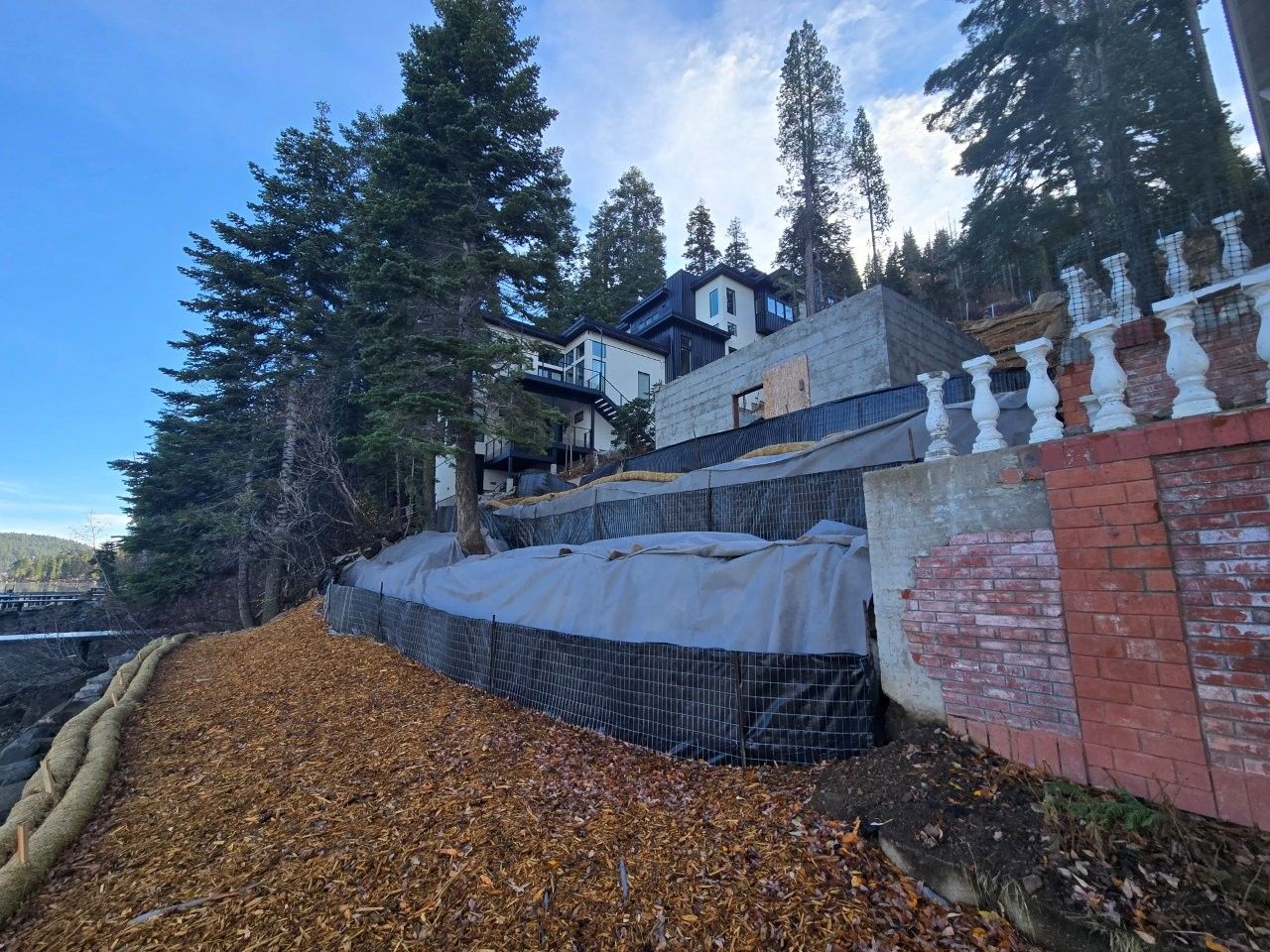
- Install sediment controls. Put in temporary sediment-control devices such as fiber rolls or silt fence, paying particular attention to locations where water concentrates or ponds. Position controls to avoid interference with snow removal.
- Protect vegetation. Install and maintain temporary fencing around trees and vegetation designated for preservation.
- Cover bare soil. Stabilize disturbed areas using appropriate erosion-control blankets or organic mulch. TRPA’s guidelines limit organic mulch to a layer no more than 1 inch thick, at least 5 feet from structures, and no more than approximately half of the bare soil area. Gravel may be used near structures.
- Stabilize slopes. Protect cut and fill slopes with permanent measures such as rock riprap, retaining walls, or vegetation, or approved temporary measures such as erosion-control blankets or hydromulch with tackifier.
- Clean up. Remove construction debris, excess materials, and spoil piles that could contribute to erosion or obstruct drainage.
- Cover stockpiles. Where approved, stockpiles remaining over winter must be covered with durable material or plastic sheeting, contained with appropriate sediment controls, and located away from sensitive or erosion-prone areas.
If construction will continue through winter, TRPA’s guidelines identify additional requirements, including paved driveways, parking and material-storage areas, keeping vehicles and materials on paved surfaces, and daily sweeping to remove sediment tracked off-site.
TRPA and partner agencies inspect sites for compliance, and violations can carry penalties of up to $5,000 per day.
A real-world example: when a project isn’t ready by October 15
On a recent project, the property owner faced several overlapping challenges: complex construction logistics, busy contractor schedules, pending permit approvals, and historical site disturbances that prevented all work from being completed before the deadline.
Rather than leave disturbed areas exposed through the winter, Lefrancois Engineering prepared an interim winterization plan that stabilized the site, protected exposed soils, and allowed the project to remain compliant until equipment could return the following grading season for final grading and stabilization.
Without those protective measures, barren soils and unfinished slopes could have contributed sediment to the local watershed. The owner also could have faced regulatory enforcement, costly cleanup, and additional corrective work following winter storms.
The lesson is that winterization doesn’t always mean finishing every part of a project. It means having an appropriate, compliant plan to protect the site until work can safely resume.
What you can still do after October 15
Not every type of construction needs to stop when the grading season closes.
According to TRPA’s grading season guidance, two types of work may proceed without a grading season exception:
- Small digs: Up to 3 cubic yards of soil disturbance, provided the work is not part of a larger project, is completed within 48 hours, and the site is stabilized afterward.
- Paving: Permitted when all grading and base compaction have already been completed.
Indoor work, framing, and other construction activities that do not disturb soil can generally continue, provided the site is properly winterized and applicable permit conditions are met.
These exemptions are narrow. Property owners should confirm that their proposed work qualifies before proceeding, particularly when multiple agencies have jurisdiction.
Grading season exceptions are for emergencies
TRPA can approve a grading season exception when an emergency exists and the proposed work is necessary to protect public health and safety, control erosion, or protect water quality.
Exceptions are not intended to accommodate ordinary construction scheduling delays, and TRPA specifically states that they are not issued to excavate new foundations.
Requests are submitted through TRPA’s application process, with site photographs and documentation of existing best management practices (BMPs). Application fees apply, and submitting a request does not guarantee approval.
Lefrancois Engineering can help property owners evaluate qualifying circumstances, prepare supporting documentation, and navigate the review process.
An exception should never be treated as a substitute for planning ahead. Whenever possible, earthwork should be completed and the site stabilized before October 15.
Planning a spring start? Winter is when the work happens
The end of grading season doesn’t mean your project needs to stall. For many Tahoe projects, winter is one of the most valuable planning periods of the year.
- Design and engineering can move forward so plans are ready well before construction season.
- Permit applications can be submitted to TRPA and the appropriate local jurisdiction, allowing time for agency review, comments, and revisions.
- Site surveys can be completed before heavy snowfall or scheduled for spring when conditions allow.
- Contractor bidding and coordination can proceed with completed plans, improving pricing accuracy and scheduling.
How far ahead should you start planning?
As a general rule, property owners should begin planning much earlier than they expect.
For projects requiring agency review, six months from permit submittal to approval is often a minimum under ideal conditions. When surveying, design development, agency comments, applicant responses, permit revisions, and contractor coordination are included, a total planning horizon of approximately 12 months is much more typical.
Actual timelines depend on project complexity, site conditions, agency requirements, and the completeness of the initial application.
For property owners hoping to begin construction on May 1, the most effective strategy is to work backward from that date. Starting design and permitting during the winter provides a better opportunity to secure approvals and line up contractors before the grading season opens.
Owners who reach spring with approved plans and contractors ready can begin earthwork as soon as permitted site conditions allow. Those who wait until April to begin planning may lose much of Tahoe’s relatively short construction season to design and permitting.
Explore more guidance on TRPA regulations and construction planning in the Lefrancois Engineering blog.
Frequently asked questions
When does the TRPA grading season start and end?
The TRPA grading season runs from May 1 through October 15 each year. Soil-disturbing work is generally restricted outside that window, and even during the season, grading is only allowed when the ground is dry and stable.
Does the grading season apply in Truckee or Reno?
TRPA’s grading season requirements apply specifically within the Lake Tahoe Basin. However, similar restrictions exist in surrounding communities.
Truckee: Projects within the Town of Truckee are subject to their own seasonal grading and erosion-control regulations, generally restricting soil disturbance from October 15 through May 1. The Town of Truckee and the Lahontan Regional Water Quality Control Board administer applicable local and regional requirements. Limited exceptions may be available with appropriate approvals.
Reno: Construction is generally not subject to the same seasonal grading shutdown. However, projects must comply with applicable Nevada Division of Environmental Protection (NDEP) requirements and local stormwater regulations, including erosion and sediment controls during wet-weather and winter conditions.
In either location, property owners and contractors are responsible for maintaining site conditions and preventing sediment and pollutants from entering stormwater systems.
Can I keep building after October 15?
Yes. Indoor work, framing, and other activities that do not disturb soil can generally continue, provided the site is properly winterized and applicable permit conditions are met.
Sites remaining active through winter may also be subject to additional requirements for paved access, material storage, vehicle movement, and sediment removal.
Can construction continue in Reno during the winter?
Generally, yes. Unlike the Lake Tahoe Basin, Reno does not have a blanket October 15 grading shutdown.
However, contractors must implement appropriate erosion and sediment controls, manage runoff, and prevent stormwater pollution throughout construction. Additional conditions may apply depending on the project, local jurisdiction, and required permits.
What happens if my project isn’t finished by October 15?
Incomplete projects must be properly winterized, even when final grading or landscaping cannot be completed.
In some situations, an engineered interim winterization plan can stabilize exposed soils, protect slopes, and maintain compliance until construction resumes the following season.
The important step is to address those conditions proactively rather than leaving an unfinished site exposed to winter weather.
What if I discover a serious drainage or erosion problem after the deadline?
Grading season exceptions may be available for emergencies involving public health and safety, erosion control, or water quality protection.
Contact a qualified engineer and the appropriate regulatory agencies before undertaking soil-disturbing work. Emergency conditions should be evaluated promptly, but they do not automatically authorize otherwise prohibited grading.
Need help preparing for winter or planning for spring?
Lefrancois Engineering helps Tahoe and Truckee property owners navigate TRPA permitting and land planning, site grading and drainage design, erosion control, and construction-site winterization.
Whether you’re working to stabilize an unfinished project, resolve a drainage issue, or prepare plans for the next construction season, early engineering involvement can help prevent costly delays and regulatory complications.
If your goal is to break ground next spring, now is the time to begin planning.
Contact Lefrancois Engineering to discuss your project and develop a realistic timeline.
Regulatory note: This article reflects published TRPA grading and winterization guidance and applicable regional requirements reviewed in October 2026. Rules, permitting conditions, and exceptions vary by jurisdiction and project. Confirm current requirements with TRPA, the appropriate local agency, or your project engineer before beginning work.